
Business
Medical and clinical trial containers
Development and sales

1 Regarding special containers

Unlike general plastic containers, containers used in clinical trials, tests, and research require designs tailored to their specific applications and reagent characteristics. We develop specialized containers for the medical and life science fields, where a higher level of quality control is required, taking into account factors such as material selection to maintain reagent stability, shapes compatible with testing equipment, and airtightness and safety to prevent leakage and external influences.
2 Strengths of LABOLOGY

Leveraging the knowledge and network we have cultivated
Project Management
In developing containers for the pharmaceutical and reagent fields, it is crucial to proceed with development while understanding both specialized knowledge and molding technology. We select various manufacturing plants as partners to realize the client's requirements and provide comprehensive support from specification review to prototyping and mass production.
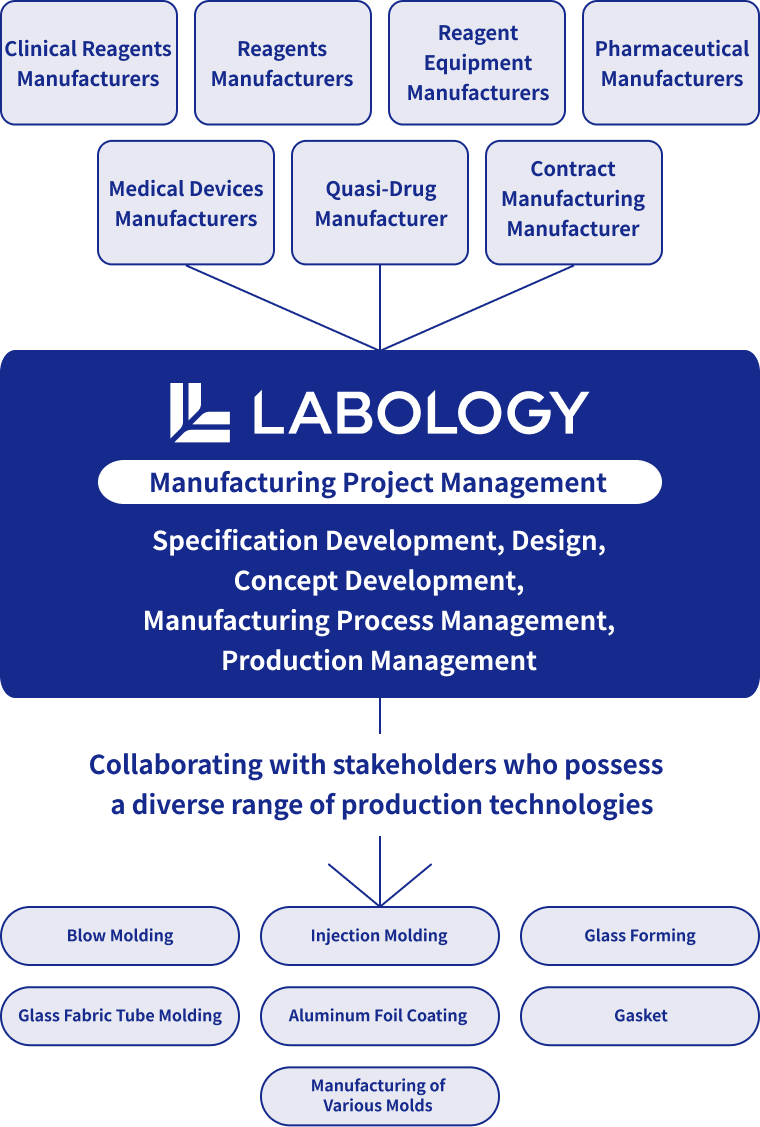
Expertise in the pharmaceutical and reagent fields,
Proposals based on a wide range of production technologies and networks.
Containers used in the clinical reagent, pharmaceutical, and medical device fields require specialized knowledge tailored to their specific applications and quality requirements. Based on our accumulated industry understanding, we organize the necessary specifications and functions for containers and propose the optimal direction for development.
Furthermore, we have experience manufacturing containers using injection molding at our own factory, and through this process, we have cultivated an understanding of production technology and accumulated a network with various manufacturing plants. We build the optimal production system according to the application and quality requirements to realize container development.
3 Order process
-
Consultation/Inquiry
Please feel free to contact us via the inquiry form.
We can assist you with initial ideas and any container-related issues. Our expert staff will carefully listen to your needs and challenges.
-
Specification review and design planning
Based on the information gathered during the consultation, we will organize details such as the intended use, reagents, quantity, and quality requirements. Then, we will consider container design and materials, and propose manufacturing methods and development approaches tailored to your needs.
-
Selection of manufacturing plant
We will select a manufacturing plant that meets the requirements and make arrangements to ensure smooth development.
-
Estimate
We will provide you with a quote that includes specifications, price, and delivery date.
Once you agree to the contents, your order will be formally placed.
-
Mold making and prototyping
We manufacture molds and create prototypes.
We will use a prototype to verify that the dimensions, capacity, functionality, and other aspects meet the specifications.
-
Prototype evaluation and compatibility check
We will ask you to evaluate the prototype container to confirm its compatibility with your testing equipment and whether there are any issues with its usage conditions. We will make adjustments as needed.
-
Mass production and delivery
Based on the finalized drawings, we will manufacture mass-production molds and transition to full-scale mass production.
After processes such as molding and painting, we conduct quality inspections and deliver the products only after confirming their quality.
4 Production example
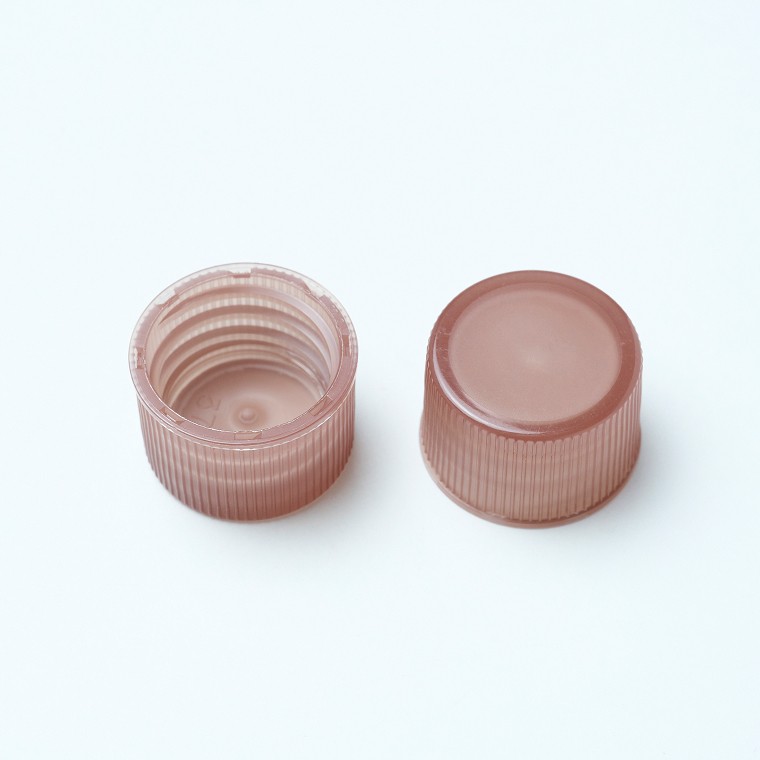
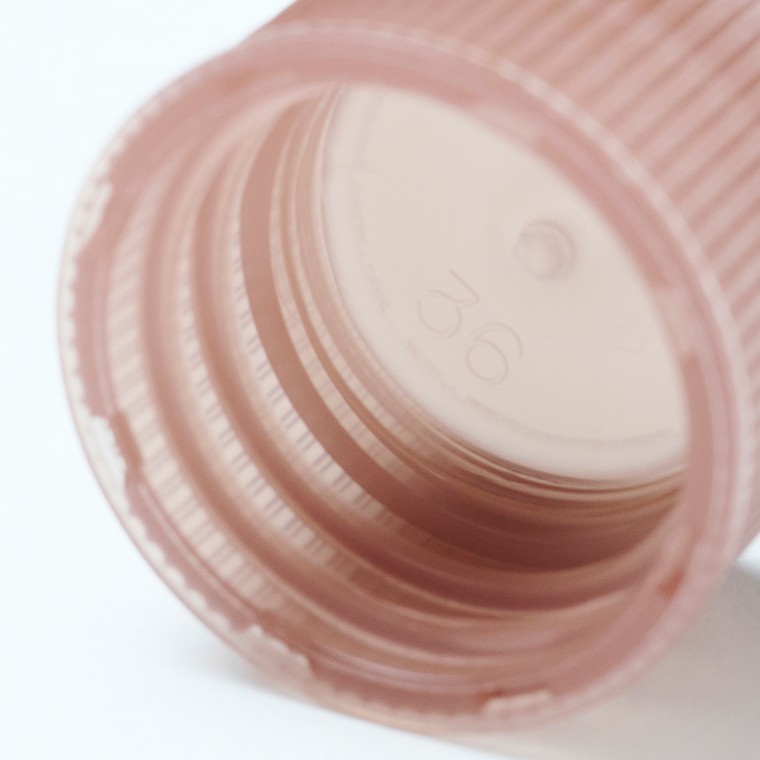
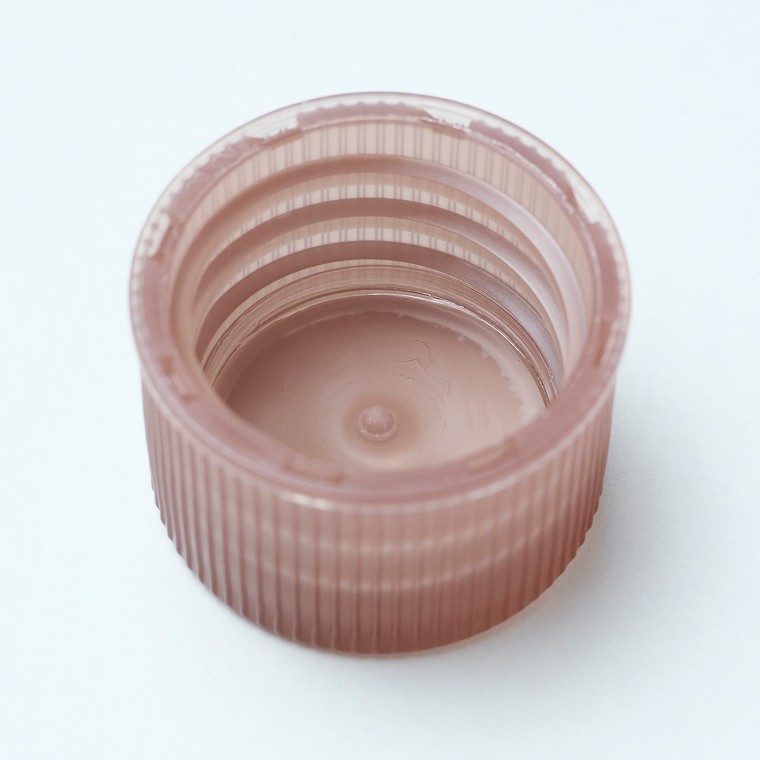
CASE 01
No fluid leakage even at low torque.
A cap structure is achieved.
- manufactured product
- Lavalon Cap
- Content
- Caps primarily used on bottles of clinical diagnostic reagents.
- Material
- A special cap that uses a soft resin material for the cap gasket.
- manufacturing technology
- A special technology combining injection molding and insert molding.
We developed our own caps to match the bottles we jointly developed with a major clinical testing equipment manufacturer. These caps have been adopted as manufacturer standard parts and have a proven track record of being used for over 30 years.
The development was prompted by a request for a cap that was easy for users to open and close, had a low tightening torque, and yet didn't leak. To achieve this, we collaborated with a raw material manufacturer to develop an original material with superior flexibility, and instead of the conventional structure where the gasket is assembled afterward, we adopted a structure that integrally molds resins of different hardnesses using a special molding technology. As a result, we were able to integrate the cap body and gasket while allowing each to appropriately perform its required function, resulting in a product that combines low torque and high airtightness.
The challenge was that it required a great deal of knowledge, experience, and technology. However, by leveraging the strengths of our fabless model, we were able to design, select materials, and choose machinery with a free-thinking approach that was not bound by manufacturing methods or materials. This flexible development system was a major factor in solving the challenges.
CASE 02
We tackled it using blow molding.
Complexly shaped, high-precision bottles
- manufactured product
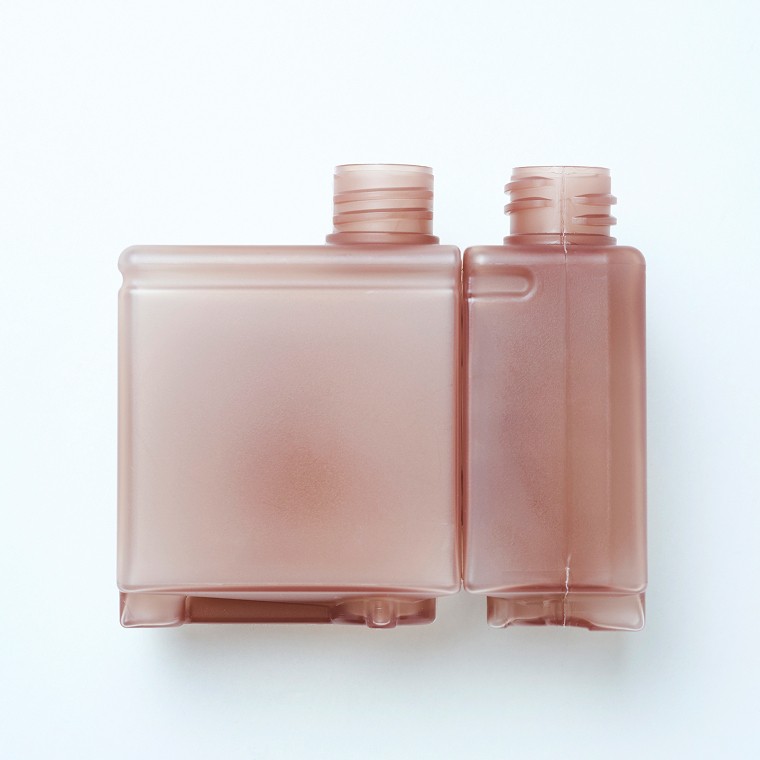
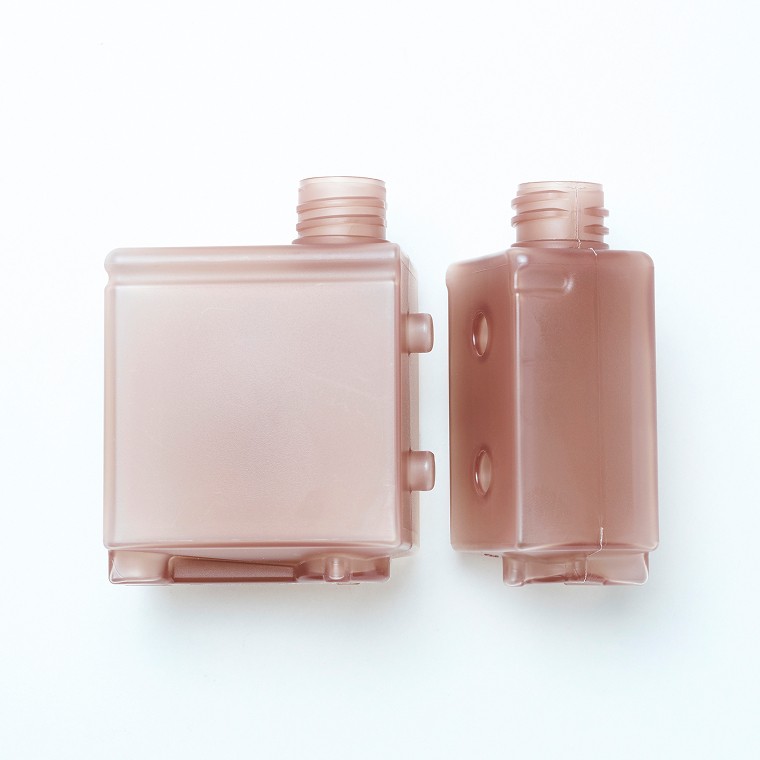
- A set of bottles containing 40ml and 80ml sizes.
- Content
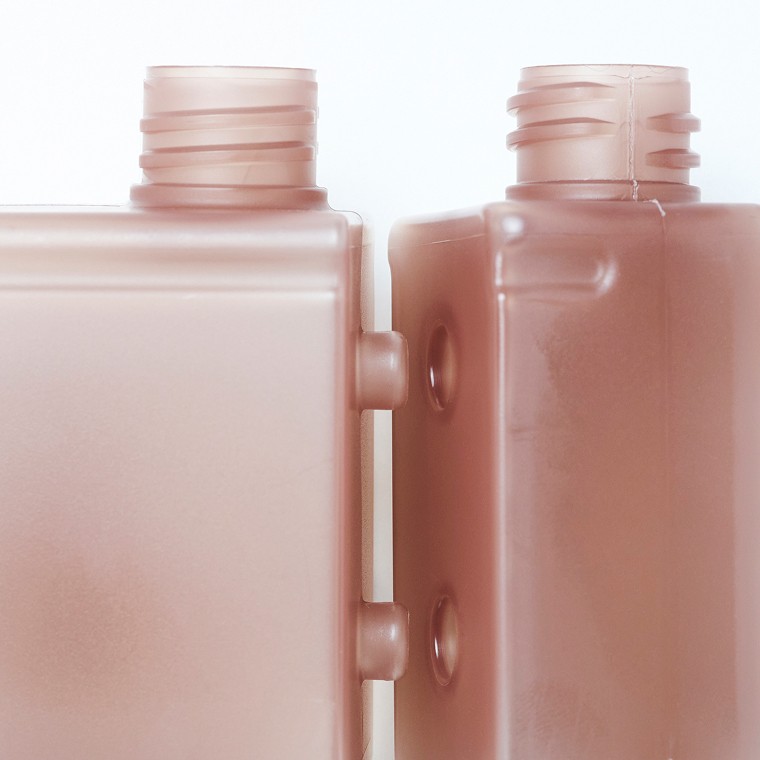
- A design that allows 40ml and 80ml bottles of clinical diagnostic reagents to be combined.
- Material
- Polyethylene container
- manufacturing technology
- Blow molding
We developed a dedicated bottle for a major clinical reagent and testing equipment manufacturer in parallel with their clinical testing equipment. This product has a proven track record of being used for over 30 years. In its development, it was required that the bottle fit snugly onto the equipment, remain stationary even at high rotation speeds, and meet stringent dimensional accuracy requirements despite being a blow-molded product, which is difficult to stabilize molding conditions for.
The initial design was difficult to realize with blow molding, so we carefully explained the manufacturing constraints and, after gaining their understanding, requested a change in shape. The clinical testing equipment manufacturer revised the drawings, optimizing the design to be both manufacturable and functional.
On the other hand, the mating surfaces of the 40ml and 80ml bottles required extremely high precision, and other companies found it difficult to achieve the same level of mating performance as our developed bottles. We adjusted the molds in micron increments and pursued the limits of precision within the drawing dimensions through repeated prototyping and improvements.
The resulting bottle is now used as a product with a high market share both domestically and internationally in the field of clinical testing equipment.